Skip to content
Maitland Concrete Works
  1. Home
  2. Services
  3. Concrete paths and footpaths

Concrete paths and footpaths in Maitland and the Hunter

The path down the side of a new Thornton house where the builder left turf, the front path to a Maitland weatherboard, a run to the clothesline or the shed. Small pours that make daily life work, priced honestly for their size.

Guide rate, supplied and laid $90 to $130per m²
  • Side path 1.2 m by 12 m, 14 m²$1,250 to $1,800
  • Front path 1.5 m by 8 m, 12 m²$1,100 to $1,550
  • Path plus clothesline pad, 20 m²$1,800 to $2,600
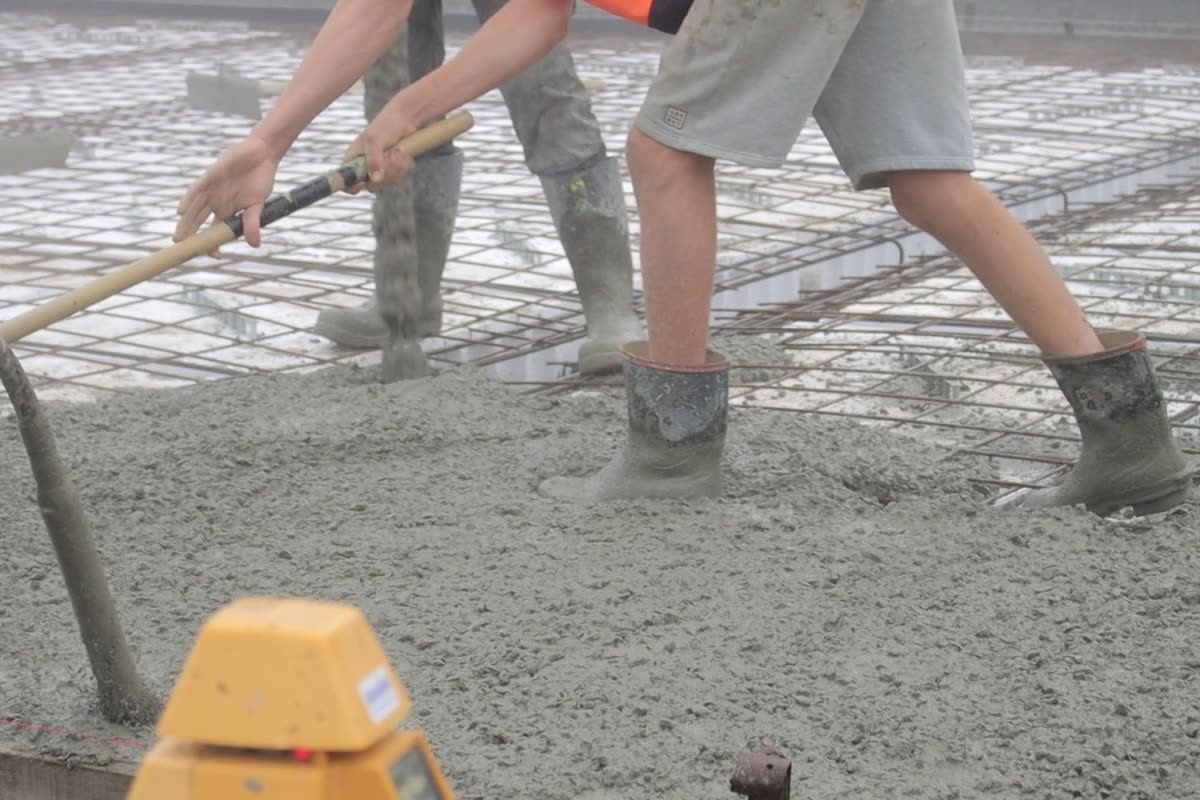
Concrete being placed and screeded to level on pour day, Cessnock

Paths are the least glamorous concrete on a property and the most walked on. In the growth suburbs of Thornton, Chisholm, Aberglasslyn and Huntlee the standard handover leaves the sides of the house in turf that turns to mud every winter, so a side path from the front to the back is often the first job after moving in. On the older streets of Maitland, East Maitland, Cessnock and Raymond Terrace it is a front path that has lifted at the joints, a rear path to the clothesline that never existed, or steps that have moved.

Small pours, honest pricing

Guide rate $90 to $130 per m² supplied and laid. The range is wide for a reason. A 12 m² path costs the same crew, truck and day as a slab three times the size, so on its own it sits at the top of the rate. Poured with a patio, a shed slab or a driveway it drops towards the bottom. If more than one job is on your list, mention all of them when you enquire so they can be quoted as one pour.

The path beside the house

The important path is the one against the wall. It goes in below the damp course, falls away from the building at a gentle grade, keeps weep holes, vents and the meter box clear, and is separated from the house with an isolation joint so the slab and the footings move on their own. Downpipes and taps are formed around. On the clay of Maitland, Morpeth and Tenambit a path that traps water against a house is the start of a damp problem, and a path that slopes towards the wall is worse than no path at all. The specification sets out the falls and joints a quote should state.

Thickness and steel

Residential paths are commonly 75 to 100 mm thick, and 100 mm with mesh wherever a wheelbarrow, a mower or a car might cross. Where a path doubles as the run to a shed or a second parking spot, it is built as a driveway. Joints are tooled or cut at close intervals, because a long narrow slab cracks across its width unless it is told where.

Footpaths on the street

The footpath along the front of the block is council’s. Maitland City Council builds its footpaths at 125 mm in 32 MPa concrete with a light broom finish and says an existing footpath crossed by a new driveway is not to be removed. Any work on it, in any of the three council areas, is a Section 138 matter and is covered in the Section 138 guide.

Finishes

Plain broom finish is right for side and utility paths. Front paths are often poured to match the driveway in exposed aggregate or coloured concrete. Where an old path is coming out first, removal adds about $35 per m².

Price the run with the calculator, read the cost guide for what moves the figure, then ask for a measure.

Rates on this site are guide figures for planning a budget. Your price is the written quote after the concreter has seen the block, and it can sit outside the guide where ground, access or a small area call for it.

Questions

Concrete paths and footpaths: the questions

How much is a concrete path in Maitland?

Guide rate $90 to $130 per square metre supplied and laid. A 14 square metre side path brackets at about $1,300 to $1,800 and a 12 square metre front path at $1,100 to $1,600. Small pours sit at the top of the range because the crew, the truck and the day cost the same as they would for a driveway. Pairing the path with a patio or a shed slab on the same pour brings the rate down.

Why should a path sit below the damp course?

Because a path poured hard against a brick wall above the damp proof course bridges it, and water then wicks into the wall. A path beside a house is set below the damp course, falls away from the building, keeps weep holes and vents clear and is separated from the dwelling with a joint so the two can move independently. On Maitland clay, paving against a house with no fall is a known cause of damp trouble.

Does a footpath along the street need council approval?

If it is on the road reserve, yes. The concrete footpath along the verge belongs to council, and each of Maitland, Cessnock and Port Stephens councils treats work on it as a Section 138 matter. Maitland City Council's drawing SD012 specifies its footpaths at 125 mm in 32 MPa concrete with a light broom finish. Paths inside your boundary need no road approval.

Can a path be exposed aggregate or coloured?

Yes. A front path is often finished to match the driveway, in exposed aggregate or coloured concrete, so the frontage reads as one piece. Side paths and utility paths are usually plain broom finish, which grips in the wet and costs least. The rates for the decorative finishes are on the driveway and exposed aggregate pages and apply to paths at the same per square metre figure, with small pours at the top of the range.

Next step

Book the site visit

Maitland Concrete Works is a referral service. Each enquiry goes to one independent concreter working the Maitland, Cessnock and Port Stephens council areas, who visits the block, measures, quotes in writing and does the work.

Get it measured and quoted

Tell us what is being poured and the suburb. An independent local concreter rings you back to book the site visit.

Or ring (02) 4012 6377

Call (02) 4012 6377 Get a quote